

Begin with the real question
Real estate underwriting is the process of deciding whether a specific opportunity still makes sense after accounting for acquisition, renovation, financing, operations, risk, and the intended exit.
The goal is not to make the property look profitable. The goal is to expose the assumptions that must be true for the deal to work.
Start from the ReiSearch Dashboard
When analyzing an existing ReiSearch property:
- Open the Dashboard.
- Select Properties.
- Open the subject property.
- Verify the property information and images.
- Review the Comparables evidence.
- Open Underwriting for the supported strategy workflow.
Navigation path: Dashboard → Properties → Select a property → Underwriting
Use Verify Property Information and Images before relying on automatically gathered values.
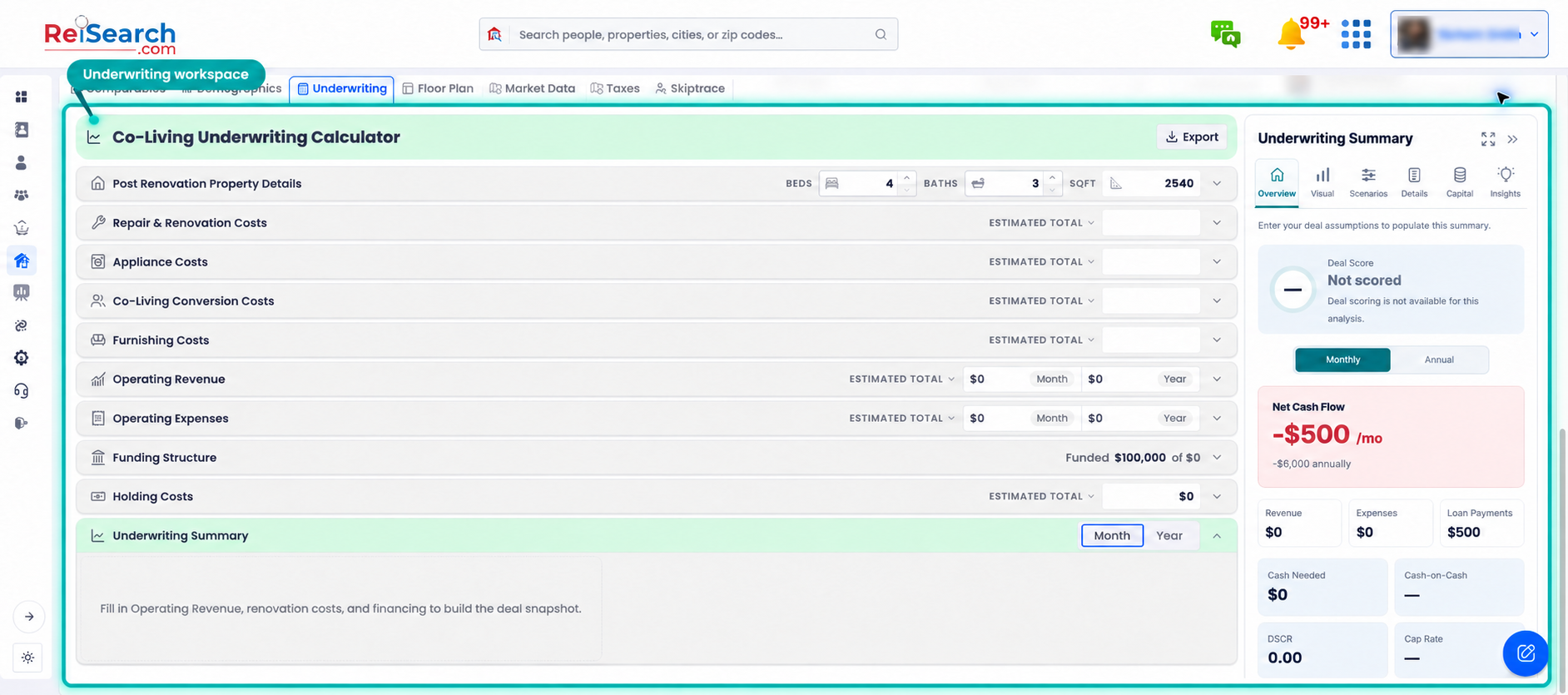
The current live-verified example is the Co-Living workspace. Other strategy tabs should be evaluated with their own supported inputs and outputs.
Separate facts from assumptions
Create three mental buckets:
- Verified facts: address, property characteristics, contract terms, title information, confirmed lender terms, inspection findings, and documented expenses
- Market evidence: comparable sales or rents, vacancy expectations, operating benchmarks, days on market, and local demand
- Assumptions: renovation budget, future rents, appreciation, refinance terms, hold period, and exit price
Do not allow an unverified assumption to silently become a fact. Record where important inputs came from and update them when better evidence becomes available.
Define the strategy before calculating returns
The same property can produce very different results under Fix & Flip, Co-Living, Short-Term, Mid-Term, or Long-Term strategies. Define the intended operating model before choosing the inputs.
Clarify:
- Who will occupy or purchase the property
- How the property produces revenue
- Which physical changes are required
- How long capital remains in the deal
- What event returns or refinances the capital
Build the complete cost basis
Include more than the purchase price:
- Acquisition and closing costs
- Repairs and renovation
- Appliances, furniture, and strategy-specific conversion costs
- Financing fees, interest, and existing debt
- Insurance, taxes, utilities, maintenance, management, and vacancy
- Holding and selling costs
- A contingency appropriate to the uncertainty in the scope
Missing a cost does not make it disappear; it only hides it from the result.
Model revenue conservatively
Use relevant comparable evidence rather than the highest advertised number. Consider rent or sale price, occupancy, concessions, collection loss, seasonality, and the time required to stabilize or sell the property.
Run at least three views:
- Expected case: the most defensible current assumptions
- Downside case: weaker revenue, higher costs, or a longer timeline
- Break-even case: the point at which the deal no longer meets the required return
Review the output as a decision
The useful output depends on the strategy, but can include total cash required, monthly or annual cash flow, profit, return on cost, cash-on-cash return, debt obligations, and the sensitivity to major inputs.
Ask:
- Which three assumptions influence the result most?
- What evidence supports them?
- What happens if repairs rise, revenue falls, or the timeline extends?
- Is the return adequate for the risk and effort?
- What must be confirmed before making an offer or releasing contingencies?
Preserve the reasoning
Keep the property record, comps, underwriting assumptions, notes, and supporting documents together. This allows collaborators to review the same evidence and makes later changes understandable.
This article is educational and is not financial, legal, tax, or investment advice. Verify material information and consult qualified professionals for decisions that require them.